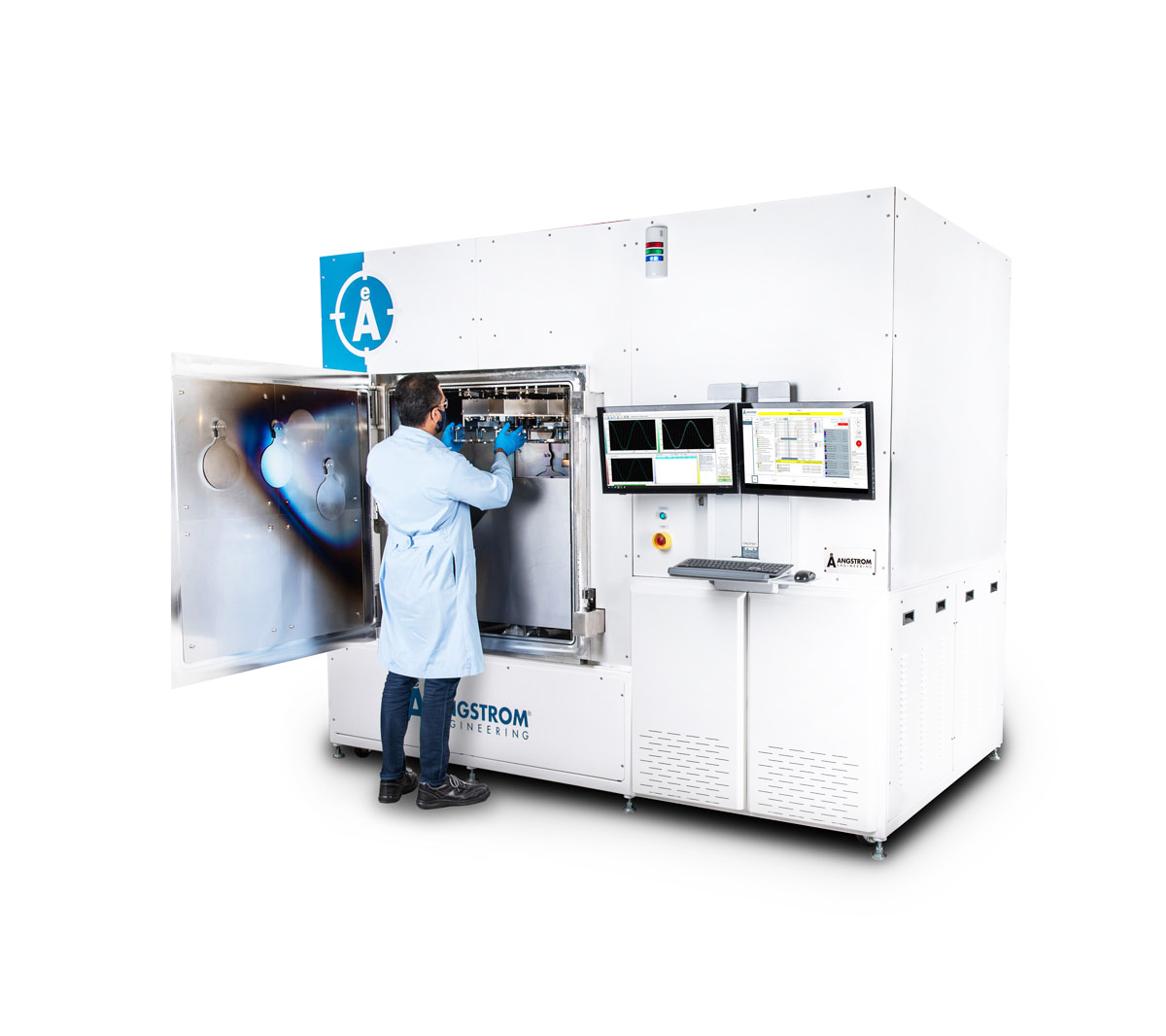
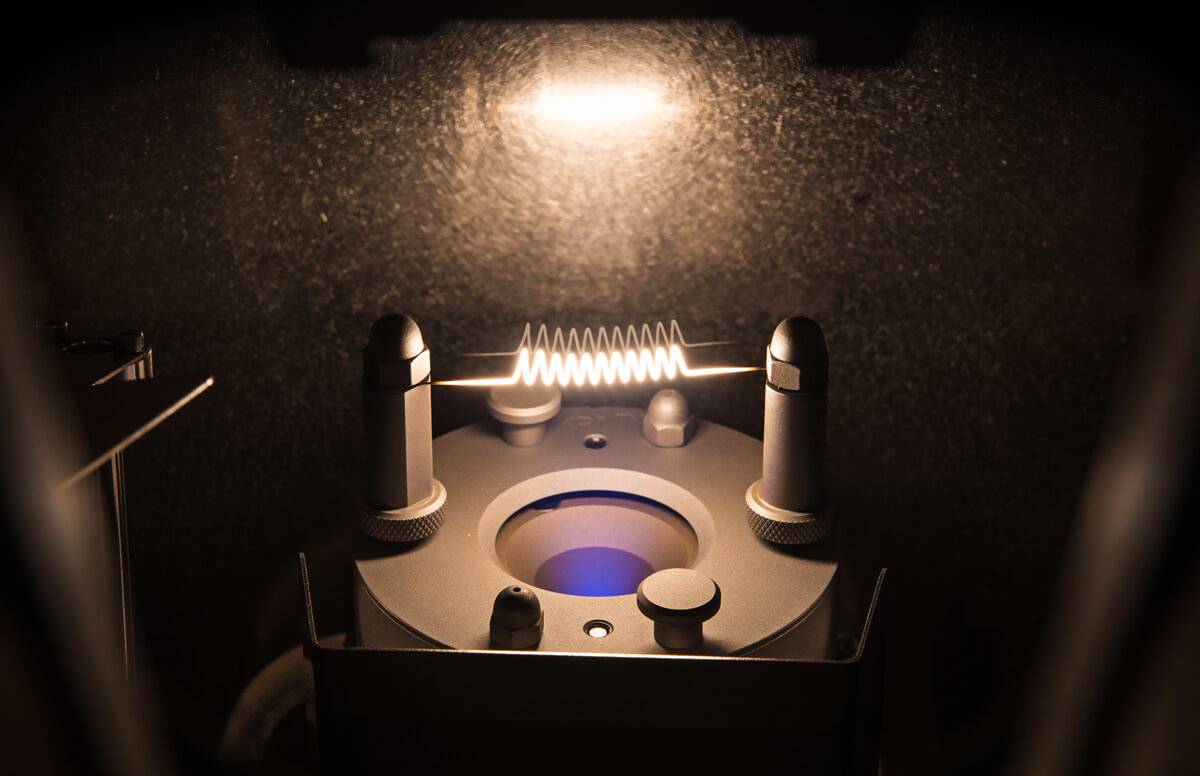
A functional thin film deposition platform is the result of hundreds of scientific discoveries made by insightful minds stretching across hundreds of years. From the ability to vacate a chamber of atmospheric molecules, to providing enough electrical current to a filament so that a material heats to it’s deposition temperature; companies like Angstrom Engineering simply integrate these practical ideas into an interconnected system that allows the next generation of scientific minds to create new and better technologies.
In the 1960’s Dr. Kaufman developed the electron bombardment ion thruster for NASA. The ion thruster ejects charged atoms (ions) in order to create cumulative thrust, opening up the possibility of the exploration of our solar system without the need for heavy, cumbersome chemical propellants. This technology already plays a role in NASA’s unmanned space program in the form of the Dawn spacecraft. It is also expected to be vital in getting humans to Mars.
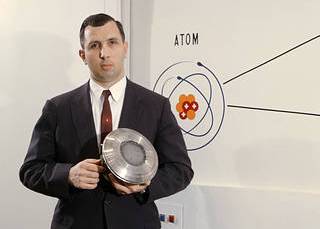
Dr. Harold Kaufman himself used previous insight to create this breakthrough space exploration technology, but he also saw its potential to improve lives here on earth. After retiring from NASA, he modified the thruster to create the end-Hall ion source (now known as the Kaufman Ion Source) to aid in the creation of thin films. These sources are used by researchers to improve the density and quality of thin films, allowing for new innovation in electronics, energy harvesting, energy storage, microelectromechanical systems (MEMs), and medical coatings. He co-founded Kaufman & Robinson, a company dedicated to providing this unique technology to scientists, engineers, and industrialists.
We were saddened to hear of Dr. Kaufman’s passing earlier this month, and wish to express our sympathy to his family and friends, as well as our gratitude to him for sharing his brilliance. Dr. Harold Kaufman was ahead of his time, devising ways to manipulate matter to do humankind’s bidding on and off the earth. We stand on the shoulders of giants, and could not do our work if not for him.