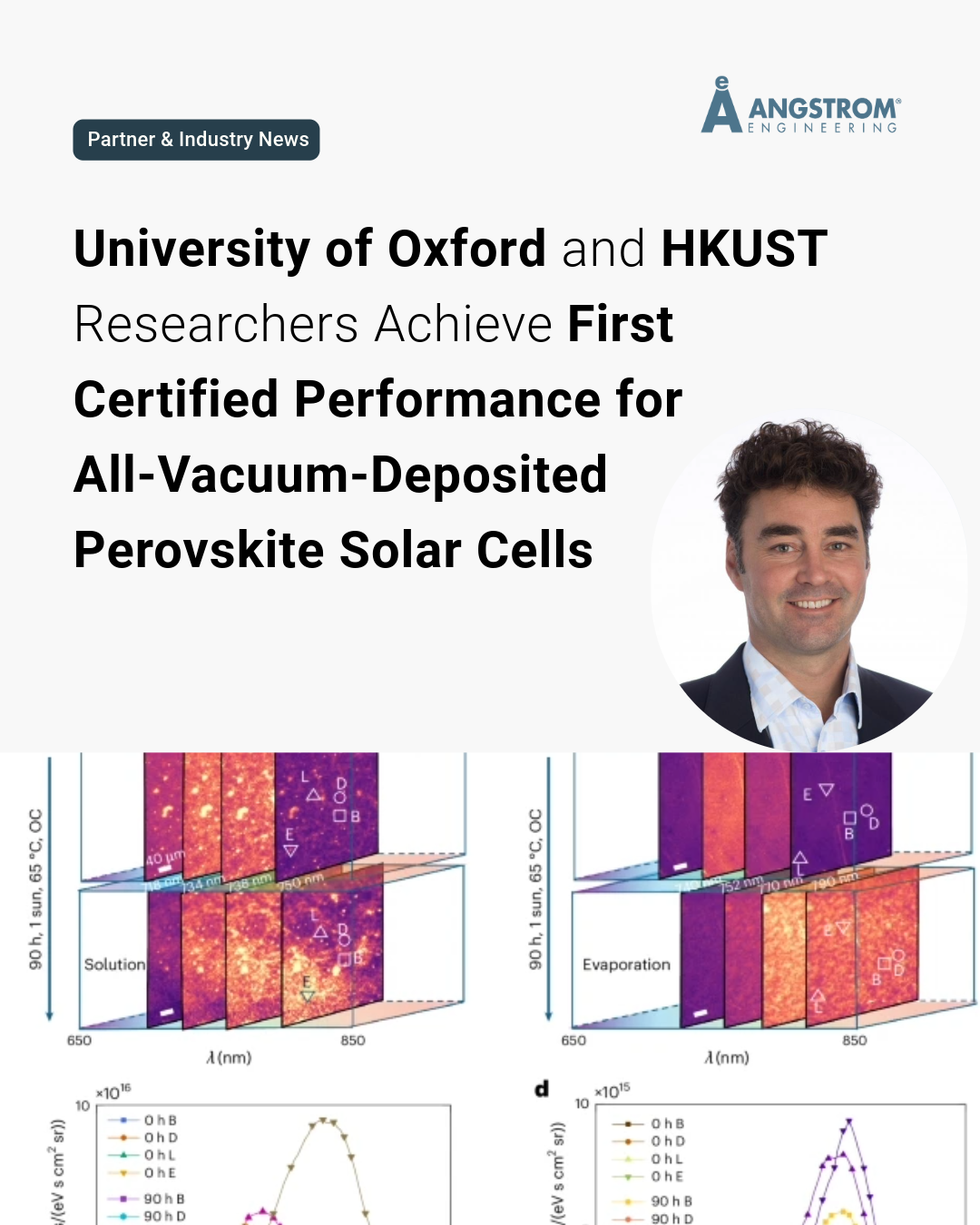
Researchers from the University of Oxford and the Hong Kong University of Science and Technology have developed a fully solvent-free method for producing high-performance perovskite solar cells, overcoming a long-standing materials challenge that has limited vacuum-deposited devices.
Most high-efficiency perovskite solar cells are made using solution-based “inks.” While vacuum deposition is a clean, industry-standard process used for technologies like OLED displays, perovskites made entirely this way have struggled with crystal formation, leading to instability under light and heat.
The researchers introduced lead chloride (PbCl₂) during a multi-source thermal co-evaporation process, enabling precise control over crystal growth and orientation. This adjustment produced highly ordered wide-bandgap perovskite films with improved efficiency, enhanced thermal and photostability, and certified performance of 18.35%, while perovskite-silicon tandem devices achieved efficiencies of 27.2%
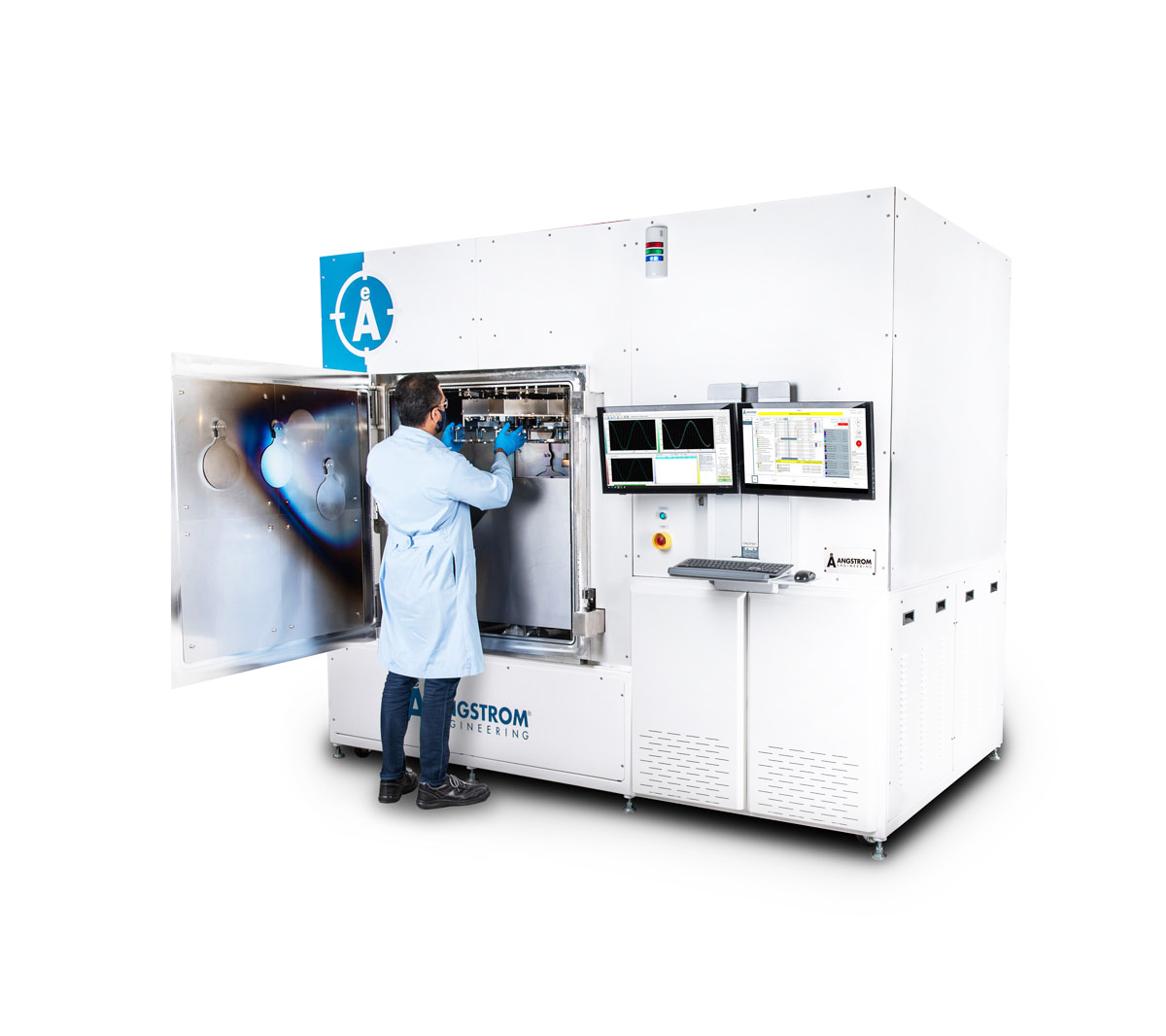
The video below tours the fabrication equipment the team used to create this breakthrough.