Researchers at Carnegie Melon University collaborated with our partners at Princeton to confirm discovery of novel crystallizable organic semiconductors using machine learning.

Organic semiconductors represent a transformative technology that bridges traditional electronics with the versatility of organic materials. They make flexible, wearable devices and next-generation displays possible.

Learn more about this project and its implications here.
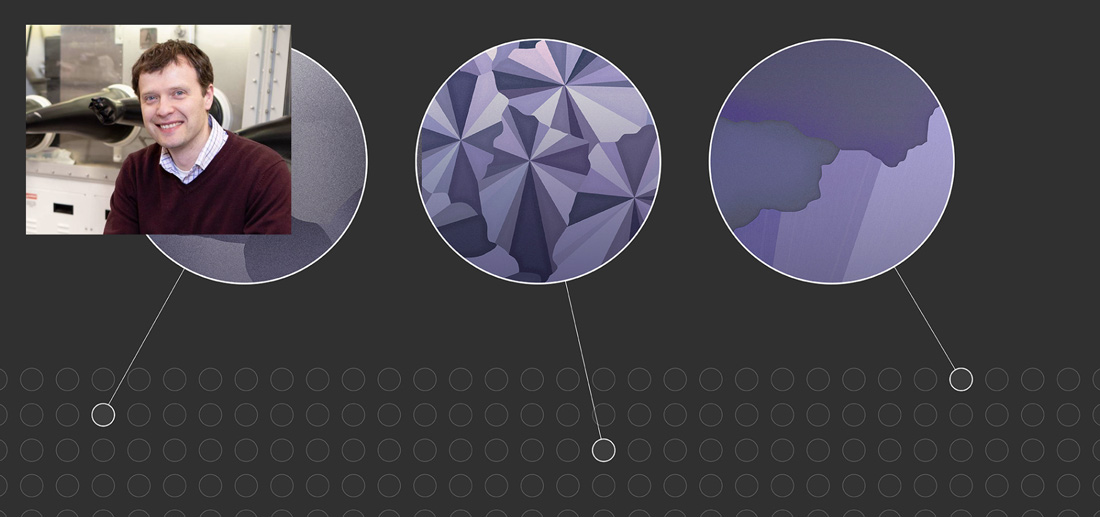
 

alt = Researcher at Carnegie Mellon University with machine learning visualizations of crystallizable organic semiconductors

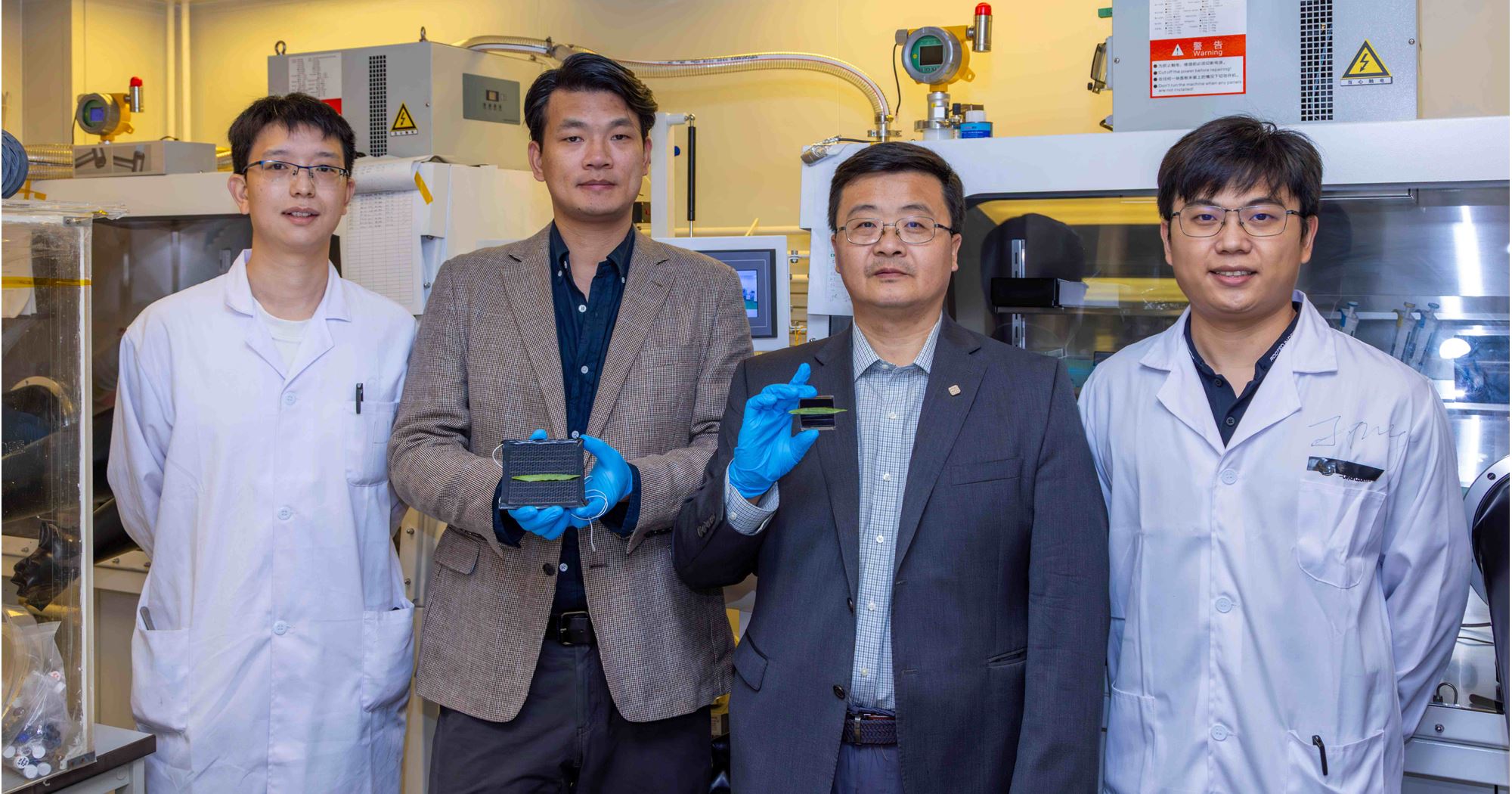
Researchers at The Hong Kong Polytechnic University (PolyU) have developed perovskite–organic tandem solar cells with enhanced resistance to shading-related damage.

Thin-film solar technologies can experience reverse-bias stress when partially shaded, reducing efficiency and causing permanent damage. By minimizing defects and suppressing reverse charge transport, the team created tandem devices that retained more than 90% of their initial efficiency under extreme reverse-bias conditions.

This advancement could improve the durability and reliability of thin-film solar technologies for future renewable energy applications.

Read More Here

Explore our perovskite solar cell series