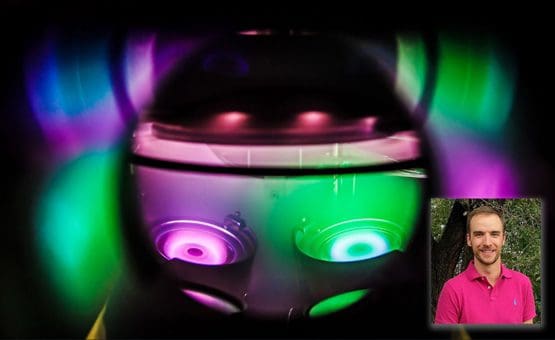
alt = Colorful plasma sputtering sources glowing inside a vacuum chamber, with an inset portrait of a researcher that explored superconductivity in the material uranium ditelluride.

Our partners at Cornell have contributed to the future of superconductors by researching a new type of superconductivity in the material uranium ditelluride. Cornell’s use of the pulse-echo ultrasound device – which was fabricated on what Principal Investigator Brad Ramshaw called his ‘magical sputtering chamber’ – clarifies and confirms the properties of uranium ditelluride and how those characteristics can be applied. This research is crucial as it clarifies the fundamental nature of the superconductor to allow for future scientific exploration, future technological applications, and promising possibilities surrounding superconductivity and science.
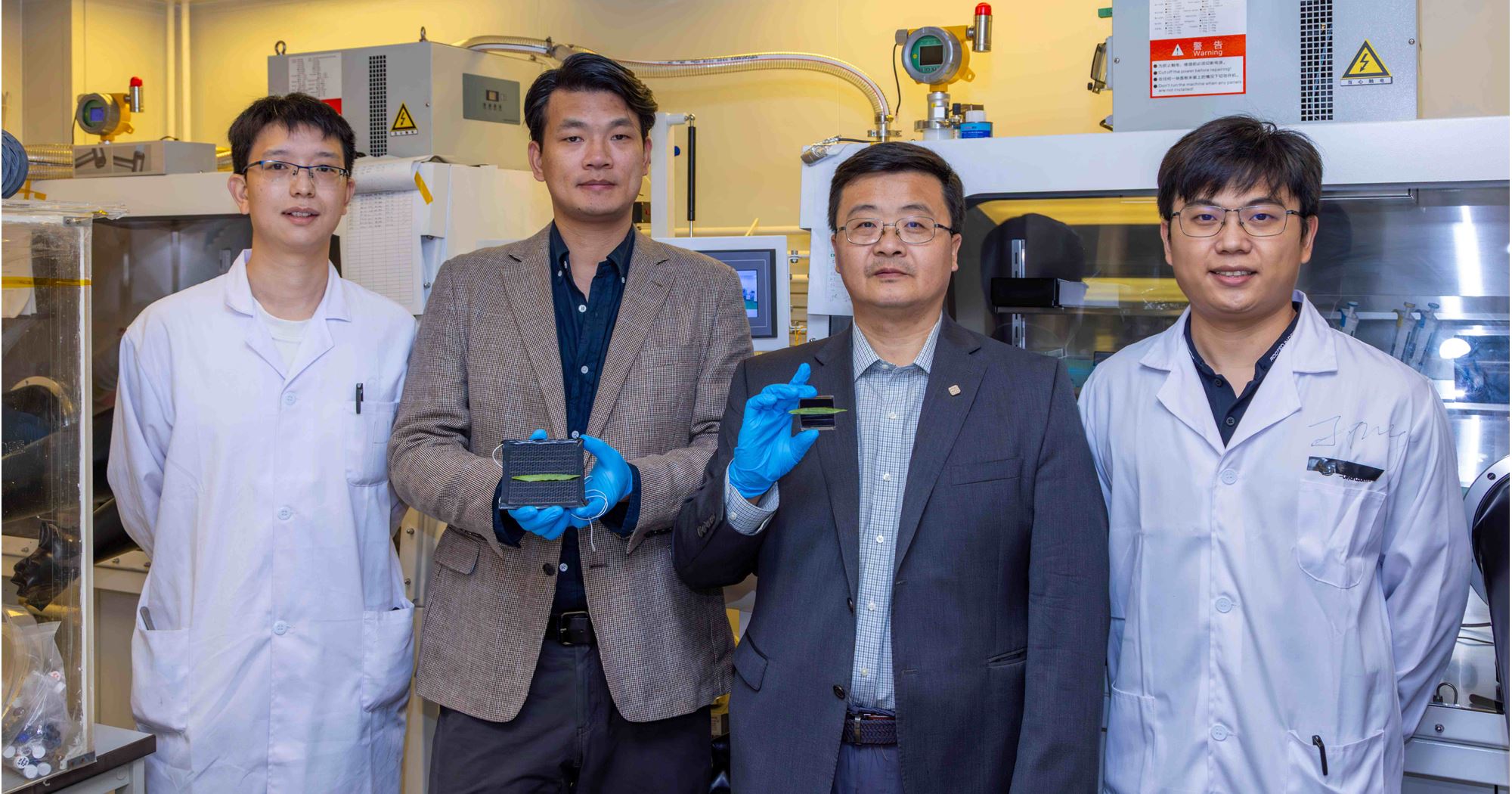
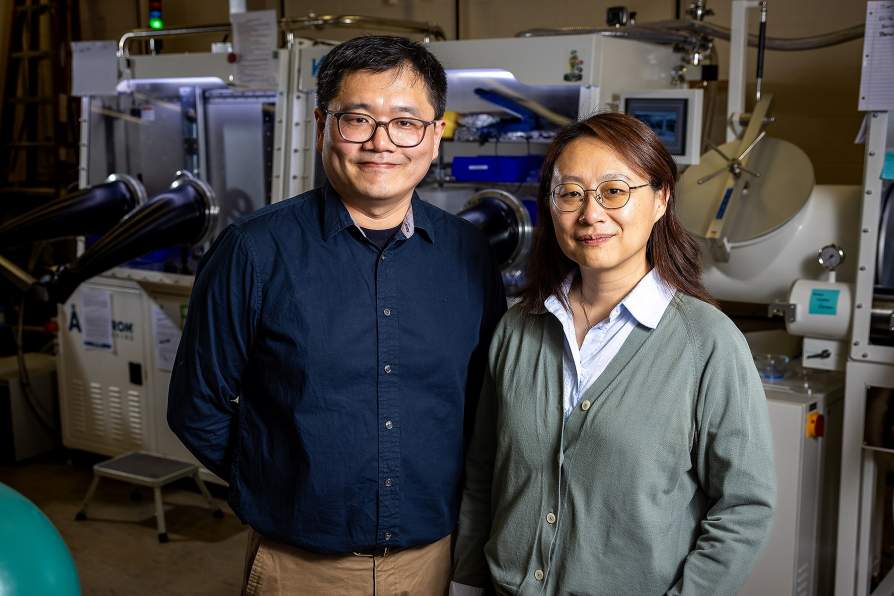
Researchers at The Hong Kong Polytechnic University (PolyU) have developed perovskite–organic tandem solar cells with enhanced resistance to shading-related damage.

Thin-film solar technologies can experience reverse-bias stress when partially shaded, reducing efficiency and causing permanent damage. By minimizing defects and suppressing reverse charge transport, the team created tandem devices that retained more than 90% of their initial efficiency under extreme reverse-bias conditions.

This advancement could improve the durability and reliability of thin-film solar technologies for future renewable energy applications.

Read More Here

Explore our perovskite solar cell series