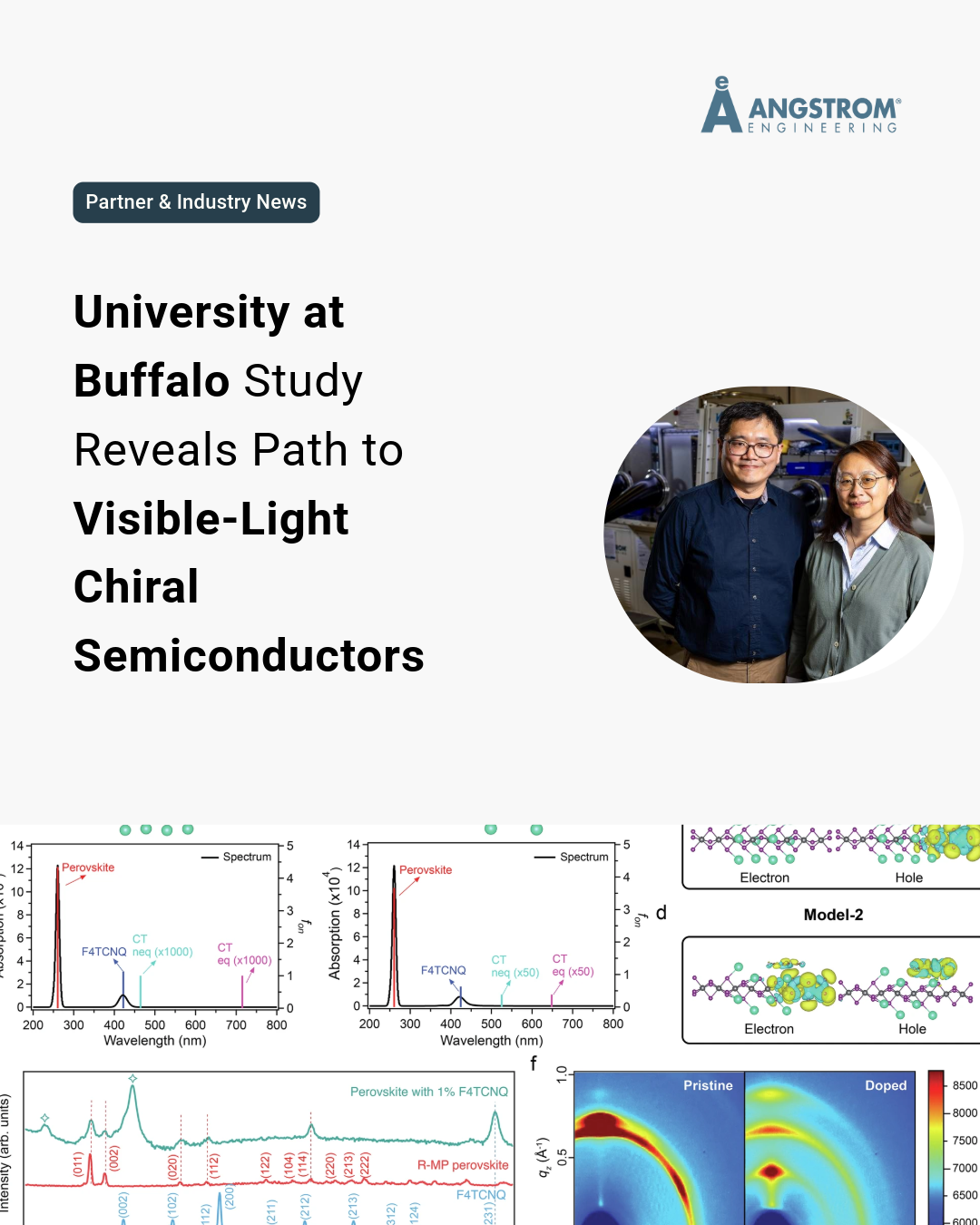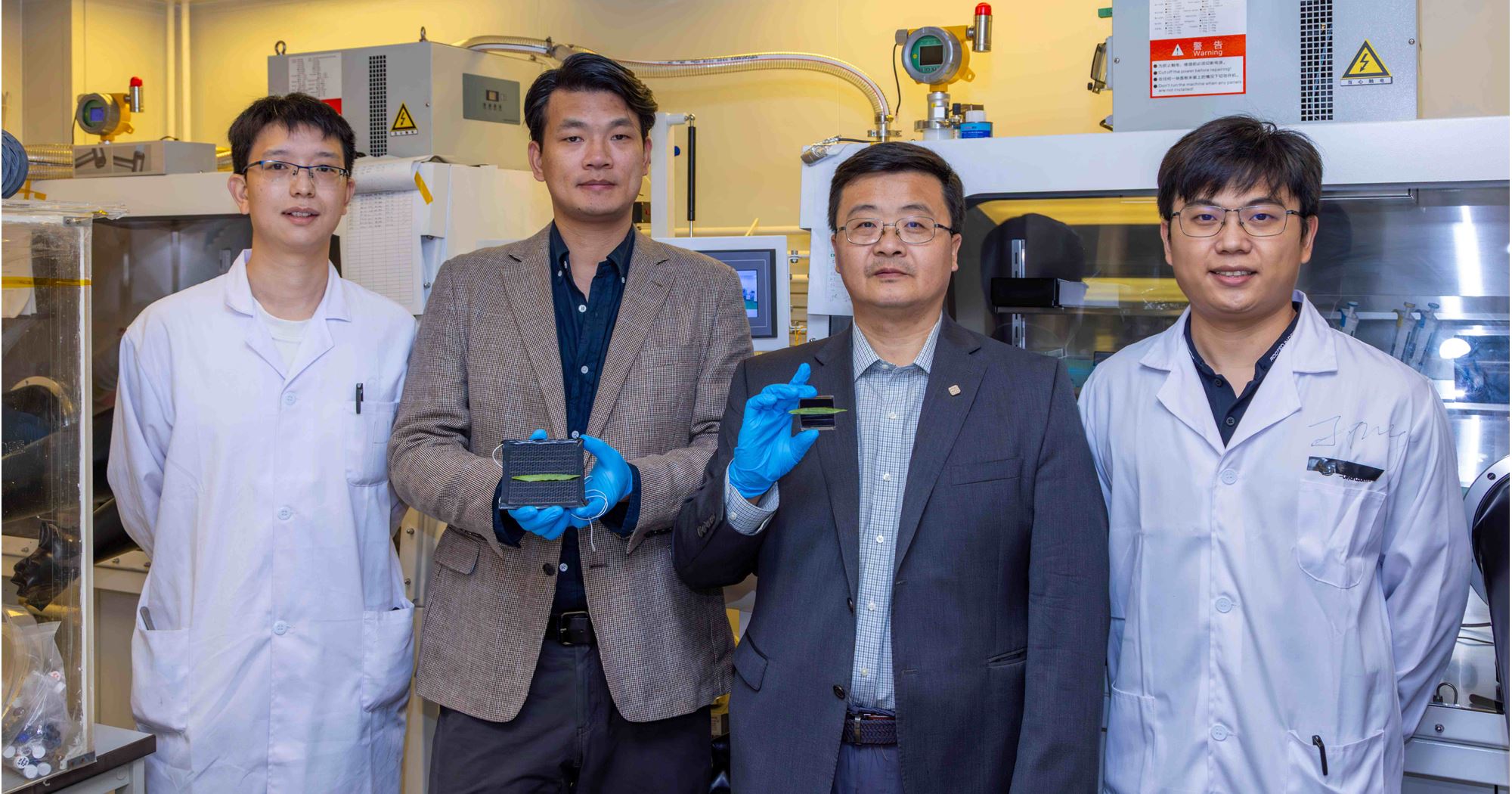
Researchers at the University at Buffalo have developed a method to improve the performance of chiral semiconductors into the visible light range.
Chiral materials can distinguish between left- and right-handed light, but usually require higher-energy UV light due to large bandgaps. By pairing a chiral perovskite semiconductor with a light-absorbing dopant molecule, the team created a charge transfer pathway that enables response to visible wavelengths while maintaining chirality.
This approach may expand the practicality of chiral materials in optoelectronic applications, including sensing, communication, and light-driven processes.